MUST-HAVE Digital Wardrobe Cataloging Services: HOW TO Launch a Profitable Business in 2025

MUST-HAVE Digital Wardrobe Cataloging Services: HOW TO Launch a Profitable Business in 2025

As the fashion industry transitions further into the digital age, digital wardrobe cataloging services have become indispensable for consumers looking for smarter ways to organize, style, and optimize their clothing choices. For female entrepreneurs in 2025, launching such a business combines three influential aspects: sustainability, tech-driven innovation, and personalization. This business idea is not only easy to launch and manage, but also a profitable avenue even without significant technical skills or investment. If you're seeking a low-risk, high-impact opportunity to start your entrepreneurial journey, digital wardrobe cataloging is your gateway to success.
Why Digital Wardrobe Cataloging is the PERFECT Business in 2025
Digital wardrobe cataloging services involve offering solutions that allow users to log, categorize, and manage their clothing digitally. Think virtual closet apps, capsule wardrobe tools, and augmented reality features enabling virtual outfit trials. Here’s why this business model stands out:
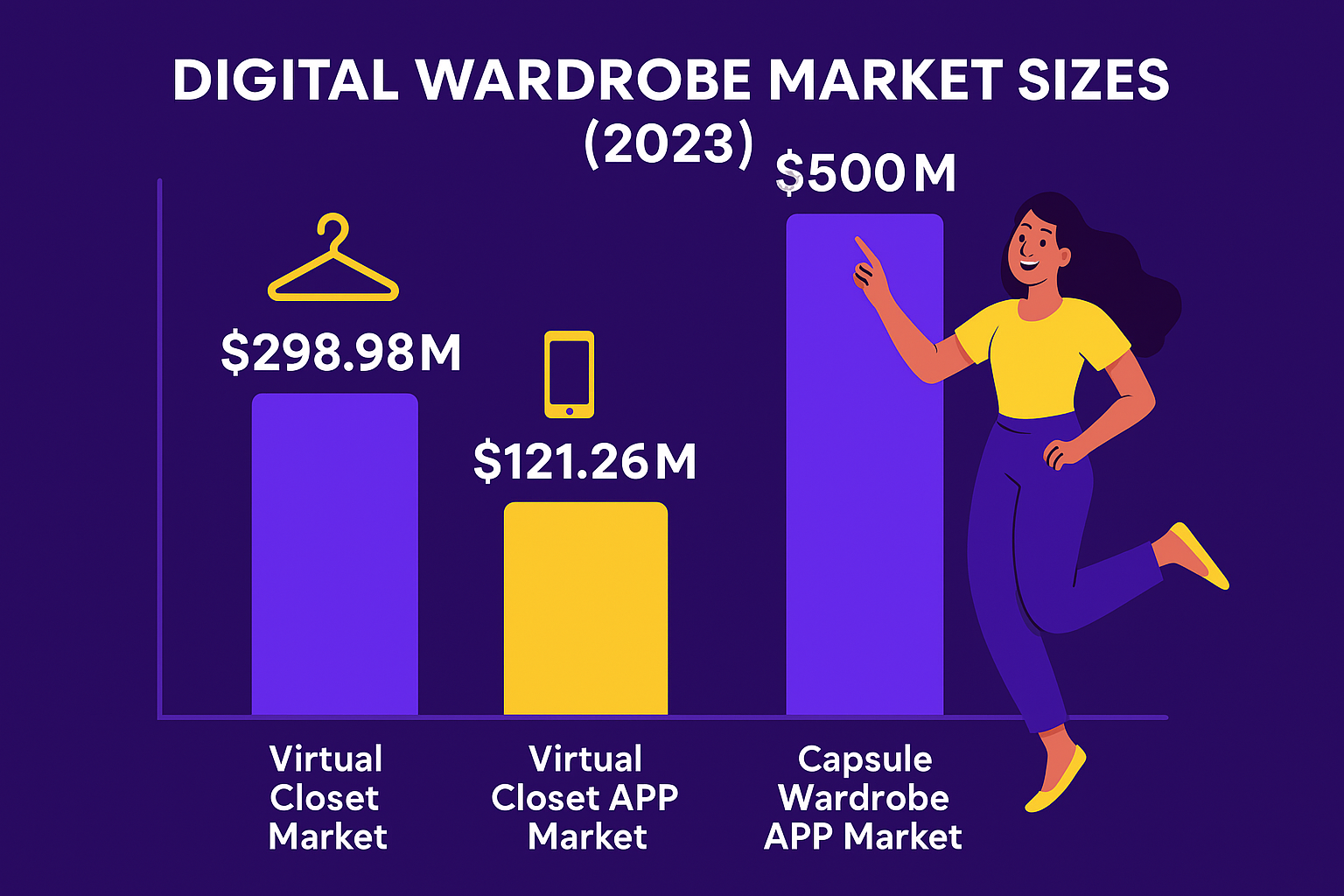
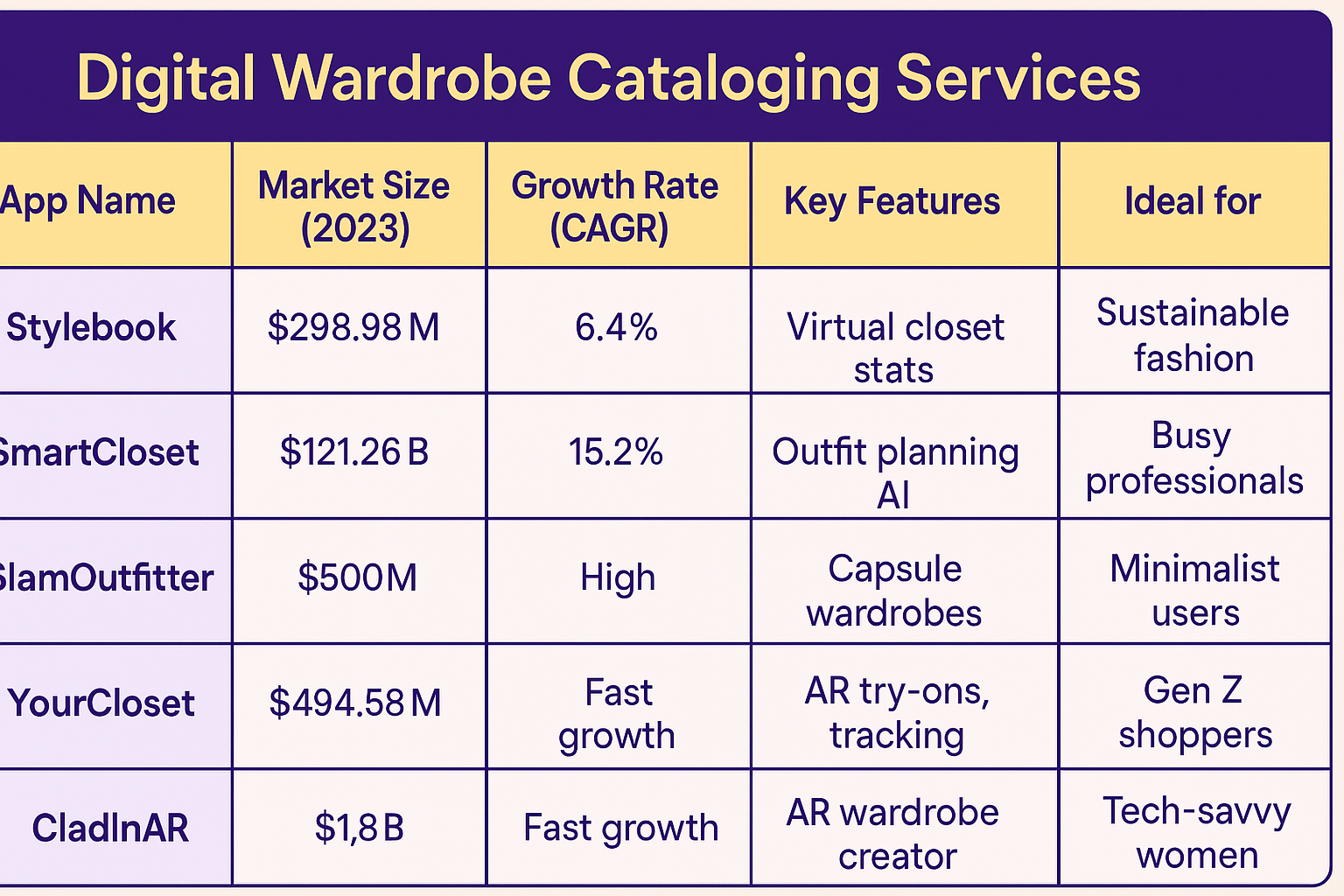
- Market Growth: The virtual closet market alone is projected to reach $494.58M by 2032, growing at a CAGR of 6.4%.
- Consumer Demand: Millennials and Gen Z are driving demand, focusing on fashion sustainability, individualistic styling, and minimalism.
- Low Entry Barrier: You can operate this business from home, requiring minimal technical skills or upfront capital.
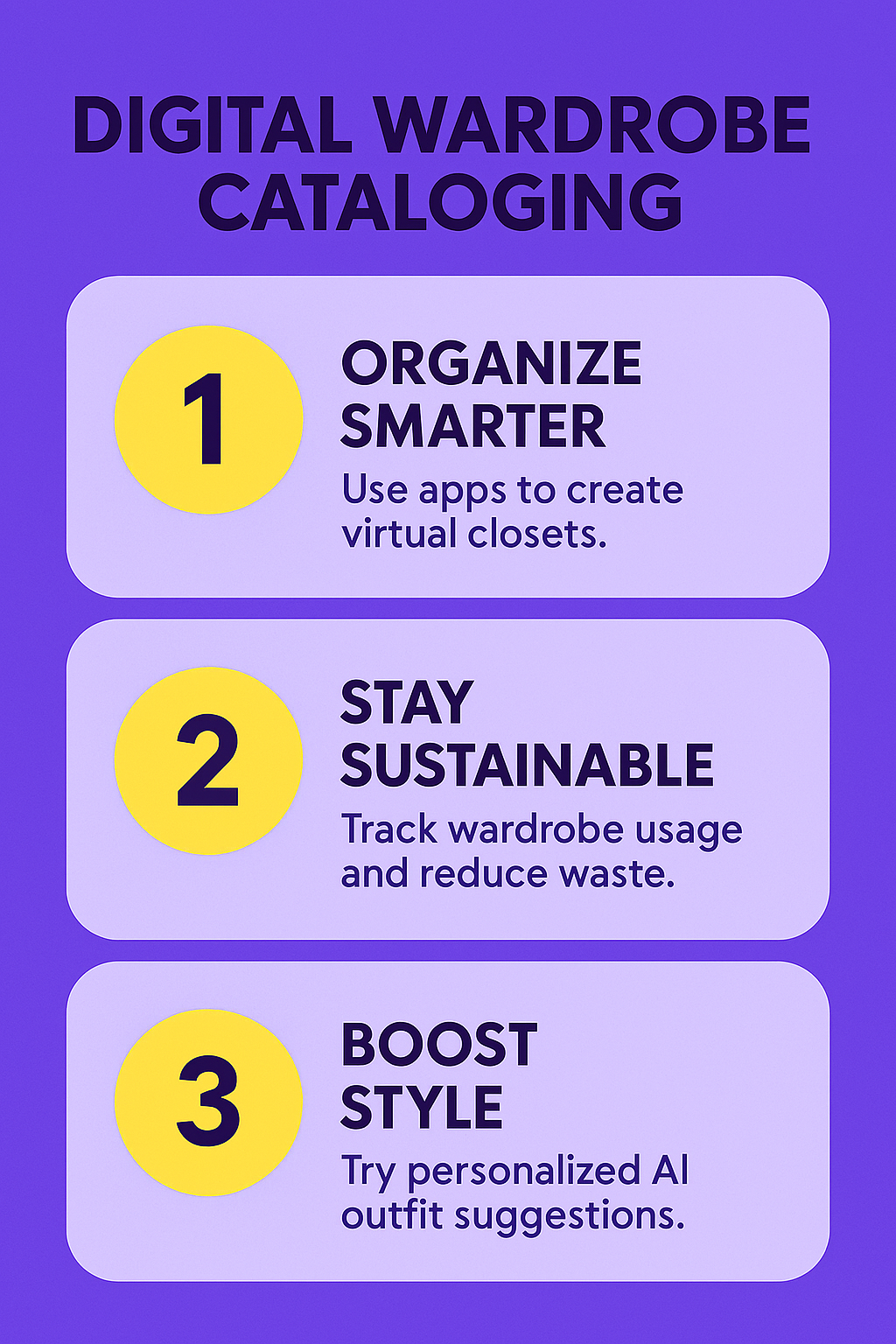
With the rise of augmented reality (AR) and artificial intelligence (AI), consumers are actively searching for tools that simplify wardrobe management. Businesses launching now in this niche have a unique opportunity to ride these trends.
Building Your Digital Wardrobe Business: A STEP-BY-STEP Guide
1. Identify the Problem
Are your target customers overwhelmed by cluttered wardrobes? Are they missing opportunities to repurpose outfits or frustrated with poor styling recommendations? Clear communication of a solution is key.
2. Define Your Target Audience
Focus on Gen Z and millennial buyers. They value personalization, minimalism, and sustainability. Urban customers in high-tech-friendly regions like Asia-Pacific and the US will likely drive demand.
3. Value Proposition and Services
Offer unique features such as:
- AR-powered virtual try-ons tailored to specific body types.
- AI styling recommendations based on current wardrobe items and customer preferences.
- Capsule wardrobe management for sustainable fashion advocates.
4. Business Model & Name
Opt for subscription-based pricing models or pay-per-use apps. Consider names that are fun, modern, and memorable, like "Closet Chronicles", "Wardrobe Wizard", or "StyleSync".
5. Pricing Model
Set low monthly user fees to attract initial customers ($5-$25/month for premium features).
6. Launch Your MVP (Minimum Viable Product)
Your MVP doesn't need to feature advanced technology immediately. Start with a basic mobile app that categorizes wardrobe items through upload images and integrates sustainability tips.
7. Get Your First Customers
Acquiring customers is harder than building the product. Start by focusing on marketing with tools like AI SEO Blog, which combines deep keyword research, content optimization, and lead funnel management to generate traffic from platforms like Google and Bing seamlessly.
8. Marketing Strategies
Invest time in explainer videos, blog content, and influencer partnerships. Feature your service on directories using F/MS Marketing Directories to get high-authority backlinks and exposure. The key is to get validated traction before scaling up.
Avoid THESE Common Mistakes
- Skipping Customer Feedback: Don’t rush into launching paid features without proof of demand. Test and collect feedback through beta offerings.
- Overcomplicating Tech: Begin with simple tools such as drag-and-drop interfaces instead of heavy software development. Time-consuming integrations can kill your launch momentum.
- Ignoring SEO: Keywords like "virtual closet" and "wardrobe organizer" can generate organic traffic if optimized correctly. Use tools like AI SEO Tool to automate your content strategy and stay visible across search engines and AI platforms.
Insights You NEED: Why Marketing Beats Product Building
Many new entrepreneurs prioritize product features, forgetting that customer acquisition is the real challenge. With tools like F/MS Marketing Services, you can secure permanent backlinks, gain traffic from top directories, and even optimize presence in AI-driven channels like ChatGPT or Bing AI. Marketing validates the idea and builds the foundation for scaling.
Conclusion
Launching a digital wardrobe cataloging business in 2025 combines innovation, sustainability, and affordability. From offering AI-driven styling suggestions to enabling virtual try-ons, the possibilities are endless for growth. With proper planning, an MVP approach, and reliable marketing tools like F/MS AI Article Writer, you can drive traffic, attract leads, and establish authority in a growing market. By focusing on simplicity and leveraging consumer demand, first-time female entrepreneurs can seize this profitable opportunity and launch a business built for scalability in today’s digital-first world.
Whether you start with a simple app or jump straight into AR innovations, 2025 is YOUR year to shine in fashion tech entrepreneurship!
FAQ on Starting a Digital Wardrobe Cataloging Business
1. What is a digital wardrobe cataloging service?
Digital wardrobe cataloging enables users to manage, organize, and optimize their clothing collections virtually. These services include features like AI-backed styling suggestions, AR-based virtual try-ons, and capsule wardrobe management for sustainability. Explore digital wardrobe trends
2. Why is 2025 the ideal time to start this business?
The virtual closet market is projected to grow from $298.98M in 2023 to $494.58M by 2032, with a CAGR of 6.4%. Consumers, especially millennials and Gen Z, are increasingly focusing on sustainable and tech-integrated fashion. Learn about market trends
3. What kind of technology do I need to start?
A simple MVP can begin with a mobile app that lets users upload wardrobe images, categorize items, and provide basic styling suggestions. Incorporating AI and AR technologies later can help scale your business. Discover tech ideas

4. Who is the primary audience for digital wardrobe cataloging?
Gen Z and millennials are the main consumers, as they value personalization, minimalism, and sustainable fashion choices. Urban markets, especially in the US and Asia-Pacific, offer the largest growth potential. Analyze consumer insights
5. How can I price my services?
Start with a subscription-based pricing model, charging between $5 and $25 per month depending on the features offered. This approach makes your services accessible to a wide audience.
6. What marketing strategies are effective for attracting customers?
Focus on SEO-optimized blog content, explainer videos, influencer partnerships, and directory listings. AI-powered tools like F/MS Marketing Directories are excellent for gaining backlinks and exposure.
7. Can I use AI to write SEO-optimized articles that help my brand grow?
Most business owners don't understand how SEO works, let alone how to use AI for writing blog articles. That's why for busy business owners there's a great free tool that doesn't require much knowledge. Write articles for free
8. Are there common mistakes to avoid when starting this business?
Yes, avoid neglecting customer feedback, overcomplicating technology at the start, and skipping SEO strategies. Begin with a basic product, test it with real users, and invest in organic traffic generation.
9. How can I use augmented reality (AR) in digital wardrobes?
AR can enhance user experience by enabling virtual outfit try-ons tailored to body types or preferences. This technology, when combined with AI, creates a compelling reason for users to adopt your app.
10. What tools should I use for app development and marketing?
You can start with app-building platforms that don’t require coding for your initial MVP. For marketing, tools like AI SEO Tool and F/MS Marketing Services can streamline customer acquisition and content strategies.
About the Author
Violetta Bonenkamp, also known as MeanCEO, is an experienced startup founder with an impressive educational background including an MBA and four other higher education degrees. She has over 20 years of work experience across multiple countries, including 5 years as a solopreneur and serial entrepreneur.
Violetta is a true multiple specialist who has built expertise in Linguistics, Education, Business Management, Blockchain, Entrepreneurship, Intellectual Property, Game Design, AI, SEO, Digital Marketing, cyber security and zero code automations. Her extensive educational journey includes a Master of Arts in Linguistics and Education, an Advanced Master in Linguistics from Belgium (2006-2007), an MBA from Blekinge Institute of Technology in Sweden (2006-2008), and an Erasmus Mundus joint program European Master of Higher Education from universities in Norway, Finland, and Portugal (2009).
She is the founder of Fe/male Switch, a startup game that encourages women to enter STEM fields, and also leads CADChain, and multiple other projects like the Directory of 1,000 Startup Cities with a proprietary MeanCEO Index that ranks cities for female entrepreneurs. Violetta created the "gamepreneurship" methodology, which forms the scientific basis of her startup game. She also builds a lot of SEO tools for startups. Her achievements include being named one of the top 100 women in Europe by EU Startups in 2022 and being nominated for Impact Person of the year at the Dutch Blockchain Week. She is an author with Sifted and a speaker at different Universities. Recently she published a book on Startup Idea Validation the right way: from zero to first customers and beyond and launched a Directory of 1,500+ websites for startups to list themselves in order to gain traction and build backlinks.